What to check with the City of Miami before tile work
These are planning points, not legal advice. Rules change, so confirm each one with the city, your building, or your association before dates are set.
- Permits depend on the property type. The city's list of work exempt from permit covers installing or replacing surface flooring such as tile only for single-family homes and duplexes, and only with no structural changes. It also says a duplex with one unit above the other needs a flooring permit. Condo and apartment units are not on that list, so ask the Building Department what your unit needs.
- Permits are filed online. The City of Miami Building FAQ says all building permits must be applied for electronically through the iBuild portal. If your project needs one, the quote should say who files it.
- Work hours are set by the city. City of Miami Bulletin 2024-001 allows regular construction from 8:00 am to 6:00 pm, Monday through Saturday. Sunday and federal holiday work needs a noise waiver under City Code Sec. 36-6, and waivers are aimed at hazardous conditions. Demolition and tile cutting are loud, so we plan them inside the city's window or your building's hours, whichever is narrower.
- Historic properties have their own path. The city's Historic Preservation Office lists more than 100 individually designated resources and sites and 10 local historic districts, and it recommends speaking with preservation staff before any project on a historic property. Small repairs can go through a standard Certificate of Appropriateness with staff, while large alterations go to the Historic and Environmental Preservation Board.
Condo towers, houses, and historic homes in Miami
The city's own permit rules split Miami housing into two groups: single-family homes and duplexes on one side, and units in multi-unit buildings on the other. That split is also a useful way to plan tile work.
Condo and multi-unit buildings
Florida's milestone inspection law (section 553.899, Florida Statutes) applies to condominium and cooperative buildings three habitable stories or taller. The first inspection is due by December 31 of the year the building turns 30, local officials may move that to 25 years based on conditions such as nearness to salt water, and it repeats every 10 years. If the inspection finds substantial structural deterioration, testing and repairs follow. The City of Miami also requires recertification for buildings over 40 years old.
When an association is managing that work, elevators, loading areas, and balconies may already be booked. Ask the manager what is scheduled before you pick dates for tile delivery and demolition, and ask whether the building has a sound-control standard for floors so the underlayment is chosen before the tile. Our guide on room access and sequence lists what to agree in writing first.
Single-family homes and duplexes
This is where the city's flooring exemption can apply. Exempt does not mean anything goes: the city's page notes that exempt work still has to meet the building code and zoning and flood rules. Moving a drain, a valve, or a wall takes the job outside a simple retile and brings in the plumbing or other trade that owns that work.
Designated historic homes
On a designated property, talk to preservation staff before choosing materials for anything visible from outside, such as entry steps or porches. Inside, we can set out an approved sample so you sign off on the exact tile before installation, as our guide on approving the material in writing explains.
Services that fit Miami properties
These are the services that most often match the condo units, houses, and duplexes described above. See every service on our services page and real project photos in the gallery.
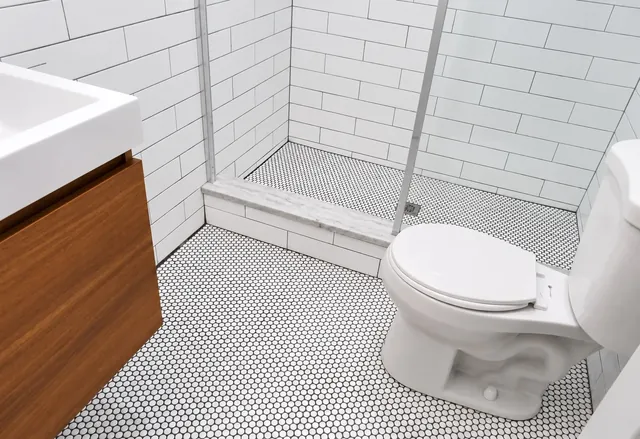
- Shower tile installation for walk-in showers, niches, and linear drains. Every tiled shower needs a continuous waterproofing assembly, and the quote states which trade provides each layer.
- Bathroom tile installation for full condo and house bathroom remodels.
- Floor tile installation for living areas, kitchens, and hallways, including the edges where tile meets wood or another floor.
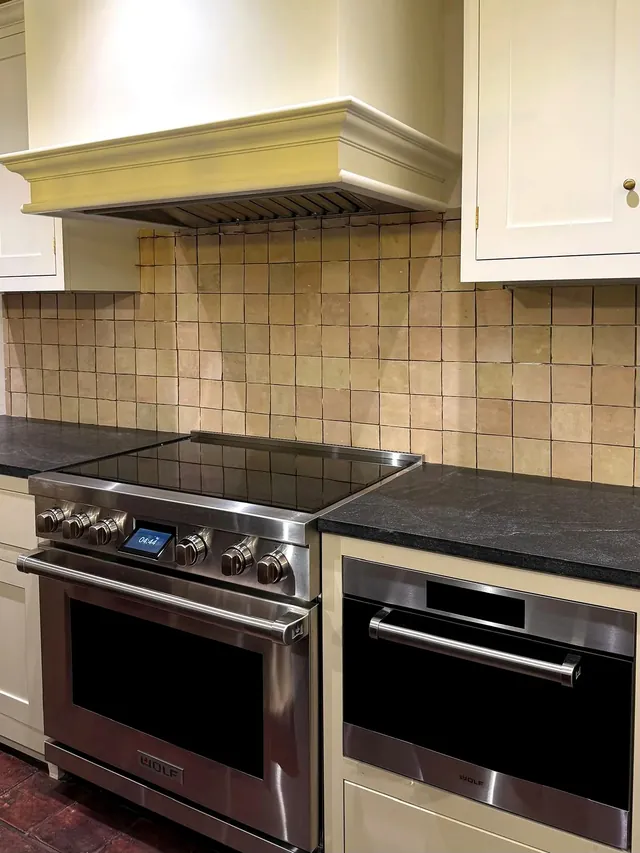
- Kitchen backsplash installation around ranges, hoods, windows, and outlets.
- Zellige tile installation for handmade tile chosen for its uneven surface and shifting color.